Workplace Violence Prevention Laws by State: Which States Require Panic Buttons in 2026
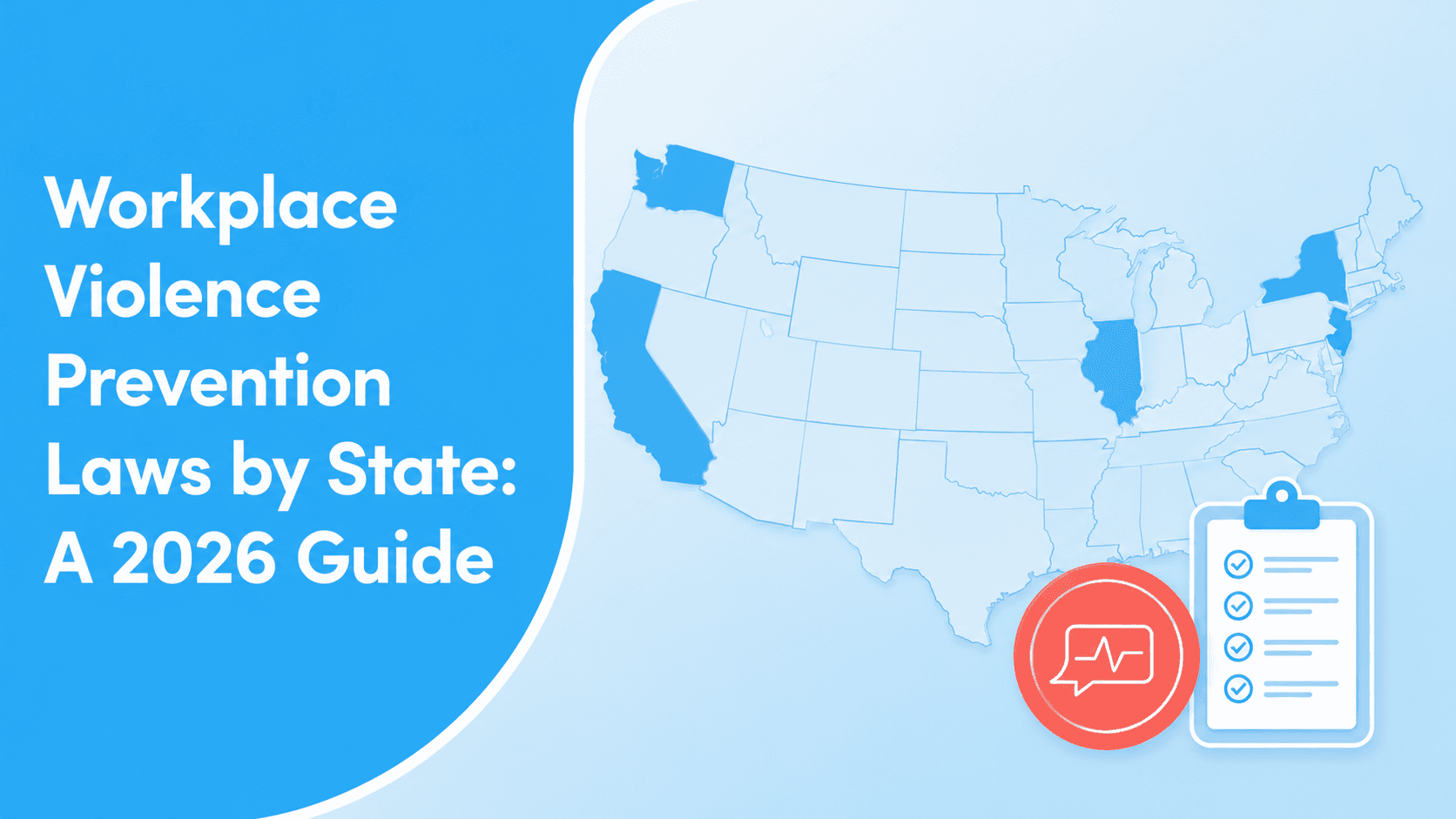
No federal law currently requires employers to provide panic buttons. The requirements that exist are set at the state and city level, led by New York, California, and Washington, and the list is growing. New York and Washington require a device that lets a worker summon help, California requires a written workplace violence prevention plan but no button, and a patchwork of city hotel ordinances adds device requirements on top of state law.
This guide is informational, not legal advice, and employers should confirm their specific obligations with employment counsel.
If you operate in more than one state, the fragmentation above is the whole problem. This guide organizes every major law into two regulatory models so you can see your total obligation at a glance, understand what these statutes actually mean by "panic button," and know what compliance looks like operationally no matter which state sends an inspector first.
Why are states passing workplace violence prevention laws?
These laws respond to a measurable problem. Bureau of Labor Statistics data released in February 2026 found that nearly one in four workplace homicides occurred while the victim was tending a retail establishment, the largest share of any setting. Healthcare workers are roughly five times more likely to suffer a workplace violence injury than workers overall. And isolated workers, the hotel housekeeper entering a guest room alone or the lone clerk closing a store, face elevated risk precisely because no coworker is nearby when something goes wrong.
The legislative pattern has moved industry by industry. It started in hospitality, where housekeepers won panic button protections in New Jersey, Illinois, and a string of cities beginning in 2018. It spread to retail with New York's 2024 law, and it is now moving toward healthcare, where Texas already has a documentation law and federal rulemaking has been underway for years. The throughline is dignity and safety for people who face the public or work alone, and the recognition that a policy binder is not the same thing as help arriving.
What are the two kinds of workplace violence prevention laws?
Every law in this space fits one of two regulatory models, and knowing which one you face tells you most of what you need to do.
The first is a documentation mandate. These laws require a written workplace violence prevention plan or policy, employee training, and recordkeeping such as an incident log. California's SB 553 and Texas's healthcare law are pure documentation mandates: identify hazards, write procedures, train people, and keep records proving you did.
The second is a device mandate. These laws require a physical or app-based way for a worker to summon help, layered on top of policy and training. New Jersey, Illinois, Washington, New York City, and the 2027 tier of New York State's retail law are device mandates, as are the city hotel ordinances.
Most states start with documentation because it covers every workplace and is faster to legislate. Device mandates tend to arrive later, or target specific high-risk roles like workers who enter occupied hotel rooms alone. For a multi-state employer, the practical read is this: documentation is the floor everywhere a law exists, and devices are the additional layer in a growing set of jurisdictions.
What is the difference between a panic button and a silent response button?
A panic button is any device a worker activates to summon help. What varies across statutes is who the alert reaches and whether activation is silent, and New York's own amendment history is the clearest illustration.
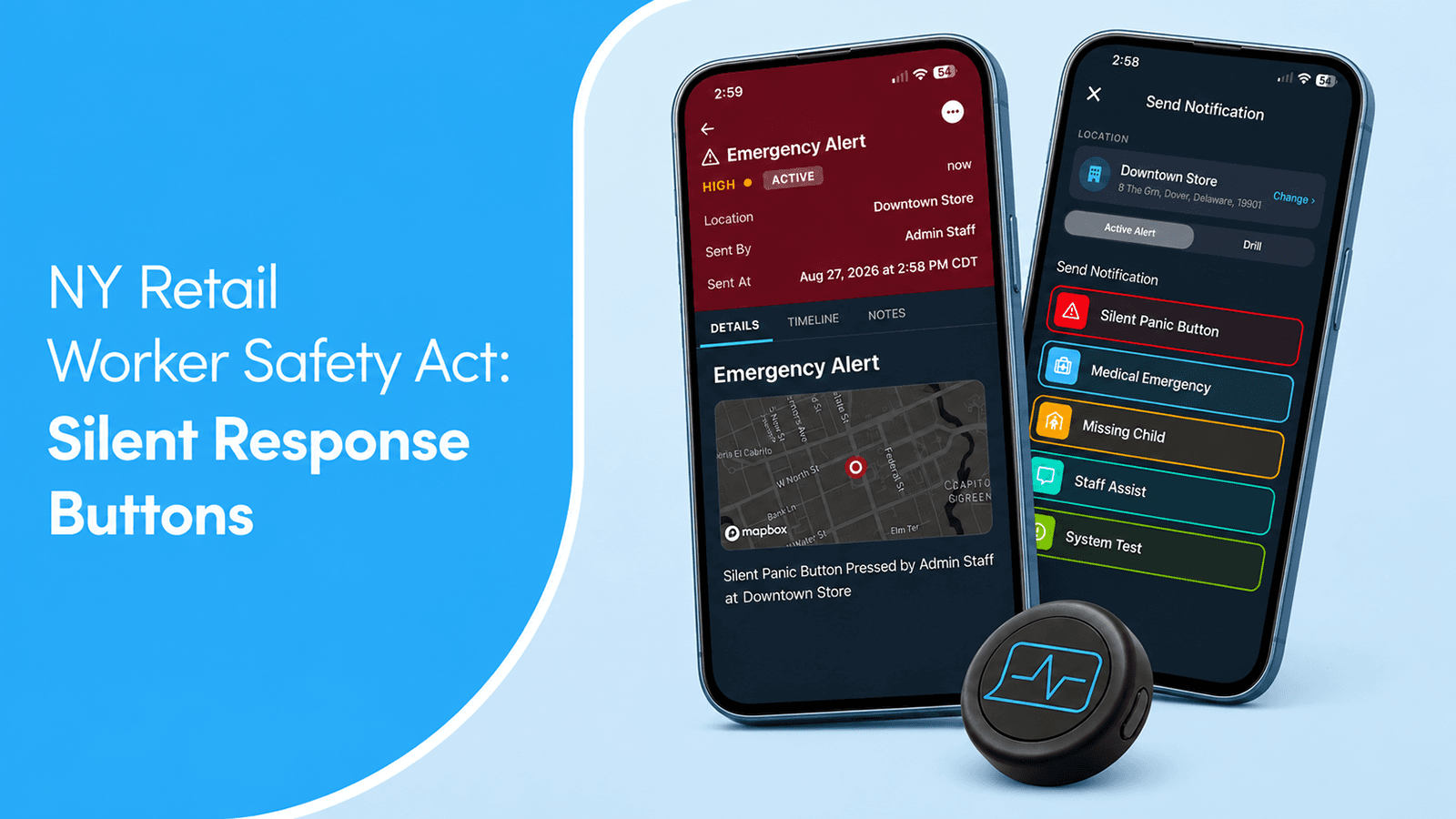
A traditional panic button, as imagined in the early hotel ordinances and in New York's original 2024 statute, dispatched help externally, in some drafts by contacting local law enforcement. A silent response button, the term New York adopted in its February 2025 amendments, routes the alert to internal responders, specifically a security officer, manager, or supervisor, without an audible alarm. A duress or emergency contact device is Washington's language: under RCW 49.60.515, it is a device an isolated worker uses to summon immediate on-scene assistance from another worker, a security guard, or an employer representative.
The distinction matters operationally. An alert to an on-site responder who knows the building, the staff, and the situation usually produces faster and better-calibrated help than an anonymous 911 dispatch, and a silent activation does not escalate a tense encounter by visibly signaling a police call. New York moved deliberately from a law-enforcement-dispatch model to an internal-response model, and that is the direction the field is heading.
What does New York's Retail Worker Safety Act require?
New York requires every employer with 10 or more retail employees statewide to adopt a workplace violence prevention policy and provide interactive training, and starting January 1, 2027, employers with 500 or more retail employees statewide must give every retail worker access to a silent response button. The law is Labor Law Section 27-e, and it operates in two tiers.
Tier one is documentation, and it is live now. Any employer with 10 or more retail employees in New York State, counted across all locations, must adopt a retail workplace violence prevention policy and deliver interactive training. These requirements took effect June 2, 2025. The policy must be distributed at hire and annually. Training is required at hire and then annually for employers with 50 or more retail employees, or every two years for employers with 49 or fewer. Employers can adopt the New York State Department of Labor's model policy and training materials or build their own that meet the statutory minimums.
Tier two is the device requirement. Effective January 1, 2027, employers with 500 or more retail employees statewide must provide silent response buttons. This is where the February 2025 chapter amendments reshaped the law: they renamed the panic button a silent response button, narrowed the 500-employee threshold from nationwide to statewide, and redirected the alert from law enforcement to a security officer, manager, or supervisor.
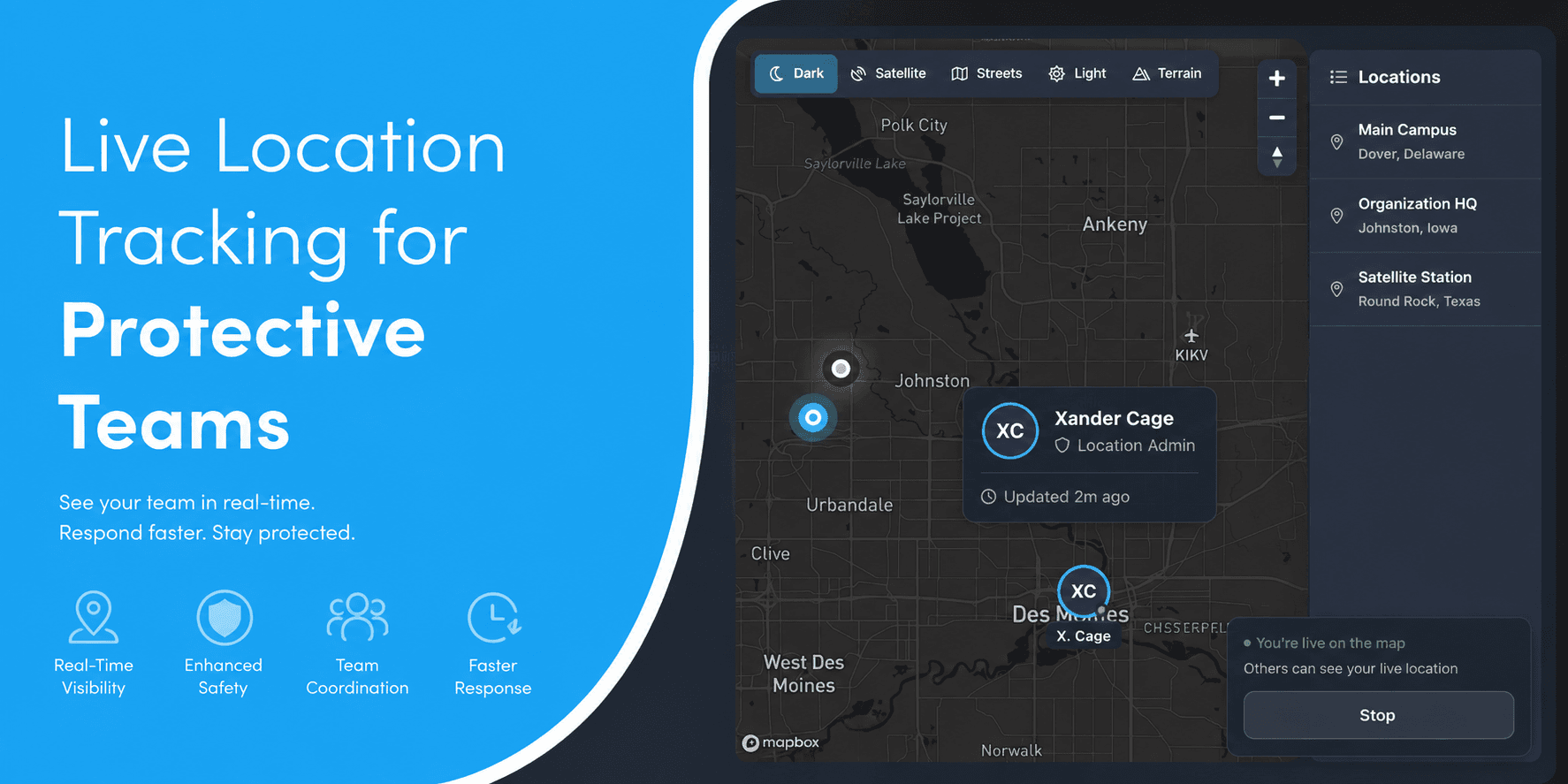
The amended statute allows three form factors: a physical button installed in an easily accessible workplace location, a wearable device, or a mobile phone application. Two conditions attach to the wearable and mobile options. They may only be installed on employer-provided equipment, so workers cannot be required to use personal phones, and they may not track an employee's location except when the button is triggered.
Enforcement is complaint-driven through the Department of Labor's Safety, Health, and Essential Rights (SHER) program, which keeps complaints anonymous where feasible and has already visited hundreds of retail locations. Treat the policy and training obligations as current, and the silent response button as a 2027 build with a real lead time for device selection and rollout.
Does California require panic buttons?
No. California requires nearly every employer in the state to establish a written Workplace Violence Prevention Plan, train employees, and keep a violent incident log, enforced by Cal/OSHA, but it does not mandate panic buttons. The law is SB 553, codified at Labor Code Section 6401.9, effective July 1, 2024.
Its reach is what sets it apart. The limited exemptions cover workplaces with fewer than 10 employees present at a time that are not open to the public, employees teleworking from a location of their choosing, healthcare facilities already covered by California's separate healthcare violence standard, and certain corrections and law enforcement settings. Everyone else is in. That makes this the one law on this list that reaches organizations nothing else touches yet: churches, private schools, nonprofits, and senior living communities operating in California must comply.
The plan must be written, either standalone or folded into the injury and illness prevention program. It must assign responsibility, provide for employee involvement in developing and implementing the plan, establish procedures to identify and correct hazards, explain how workers report incidents without fear of retaliation, and cover emergency response. Employers must log every violent incident, review the plan at least annually and after any incident, and train employees at hire and annually. Cal/OSHA's standards board is directed to adopt a formal general-industry regulation by the end of 2026, so expect the details to tighten further.
What does Washington's isolated worker law require?
Washington requires every hotel, motel, retail, or security guard entity, and every property services contractor, that employs even one isolated worker to provide that worker a panic button, adopt a sexual harassment policy, and train managers and workers, with the current requirements effective January 1, 2026. The governing statute is RCW 49.60.515.
The law was enacted in 2019 and phased in for hotels and motels with 60 or more rooms beginning January 1, 2020. House Bill 1524, signed April 16, 2025, strengthened it substantially: the room-count threshold is gone, replaced by the isolated worker test. An isolated worker is generally someone who spends a majority of working hours alone, whose primary duty involves working without a coworker present, or who works where coworkers or supervisors cannot immediately respond to a distress call.
The required device is an emergency contact device the worker uses to summon immediate on-scene assistance from another worker, a security guard, or an employer representative, and it must be simple to activate without delay. Employers must also train managers and isolated workers on harassment prevention and on how to use and respond to the devices, provide a resource list including the EEOC and the Washington State Human Rights Commission, and keep records of panic button purchase and use for production to the Department of Labor and Industries on request. Licensed contracted security guard companies are exempt from the device provision specifically.
What do Illinois and New Jersey require for hotels?
Illinois and New Jersey were among the first states to mandate hotel panic buttons, both effective in 2020, both aimed at workers who enter guest spaces alone.
Illinois's Hotel and Casino Employee Safety Act, part of Senate Bill 75, took effect July 1, 2020 and applies to all hotels and casinos regardless of size. It requires a portable emergency contact device for any employee assigned to work alone in a guest room, restroom, or on a casino floor, plus a written anti-harassment policy and anti-retaliation protections, and it carries a private right of action.
New Jersey's law, P.L. 2019, c. 422, took effect January 1, 2020 and applies to hotels with at least 100 guest rooms. Employers must provide a panic button at no cost to workers assigned to housekeeping or room service duties in guest rooms without other employees present, and must respond promptly on activation. Penalties run up to $5,000 for a first violation and $10,000 for each subsequent one.
Which cities require hotel panic buttons?
A layer of city ordinances requires hotel panic buttons independent of state law, concentrated on the West Coast, most covering hotels of all sizes. If you operate in these cities, the city rule applies even where the state has no device mandate. Verify thresholds against current municipal code before relying on them.
City | Instrument | Panic button threshold | Effective |
Chicago, IL | Municipal Code 4-6-180 | All hotels | July 1, 2018 |
Miami Beach, FL | Ordinance 2018-4207 | All hotels and hostels | Aug 1, 2019 |
Santa Monica, CA | Municipal Code Ch. 4.67 | All hotels | Jan 1, 2020 |
Oakland, CA | Measure Z | 50+ rooms | 2019 (sources conflict on date) |
Long Beach, CA | Measure WW plus council ordinance | All hotels; 50+ rooms adds workload rules | Nov 2018 |
West Hollywood, CA | Hotel Worker Protection Ordinance | All hotels | Jan 1, 2022 |
Sacramento County, CA | County Code Ch. 4.75 | 25+ rooms, unincorporated areas | Mar 29, 2018 |
Los Angeles, CA | LAMC Art. 8, Ch. XVIII | All hotels; 60+ rooms adds security staffing | Aug 12, 2022 |
Seattle, WA | SMC 14.26 | 60+ rooms | July 1, 2022 |
New York City, NY | Safe Hotels Act (Local Law 104 of 2024) | Core employees entering occupied rooms | May 3, 2025 |
The NYC Safe Hotels Act deserves a specific note because it pairs the device mandate with a licensing regime. Signed November 4, 2024 and effective May 3, 2025, it requires hotel operators to obtain a license from the Department of Consumer and Worker Protection and to provide panic buttons at no cost to core employees whose duties involve entering occupied guest rooms. The device must alert an on-site person able to provide immediate assistance and must convey the worker's location.
What workplace violence laws are coming next?
The next frontier is healthcare, though the federal timeline has slipped. Federal OSHA has worked toward a Workplace Violence in Health Care and Social Assistance standard for years, convening a small business review panel in 2023, but the Spring 2025 regulatory agenda moved the rulemaking to long-term action status, meaning no federal standard is expected soon. OSHA continues to cite workplace violence hazards in healthcare under the General Duty Clause, and the federal Workplace Violence Prevention for Health Care and Social Service Workers Act has been reintroduced in Congress but is not law.
States are not waiting. Texas SB 240, now Chapter 331 of the Health and Safety Code, required covered healthcare facilities to have a violence prevention committee, written plan, and policy in place by September 1, 2024. It is a documentation mandate enforced through facility licensing, with no device requirement. California, Washington, and Oregon operate their own healthcare violence standards, and retail safety bills modeled on New York's have been introduced in several other states. The direction is consistent: more states, more industries, and a steady migration from documentation-only toward devices for the highest-risk roles.
What does compliance actually look like operationally?
Strip away the statute names and the requirement pattern is remarkably consistent. Whether you face a documentation mandate, a device mandate, or both, a defensible program needs the same building blocks: an accessible way for a worker to summon help silently, alerts that reach designated on-site responders with the worker's identity and location, training people can actually complete with records proving they did, policies distributed where workers will see them, incident documentation with timelines, and the ability to produce all of it quickly when a complaint triggers an investigation.
This is where building the capability once, around the pattern rather than any single statute, pays off.
How PushPulse helps
PushPulse covers those building blocks in one platform.
Summoning help. One-tap panic activation from the mobile app, a wearable Bluetooth panic button, and wall-mounted tablets that serve as fixed alert points. That range spans New York's three silent response button form factors, Washington's emergency contact device, and the hotel ordinance requirements in one system, using the phones your team already carries alongside dedicated hardware where it fits.
Reaching responders. Alerts route to designated on-duty responders across push, SMS, email, and voice, with the sender's identity and location attached, real-time acknowledgment tracking, and the ability to pull in additional responders mid-incident when the first line does not answer. That is the escalation logic laws like Washington's contemplate when they require immediate on-scene assistance.
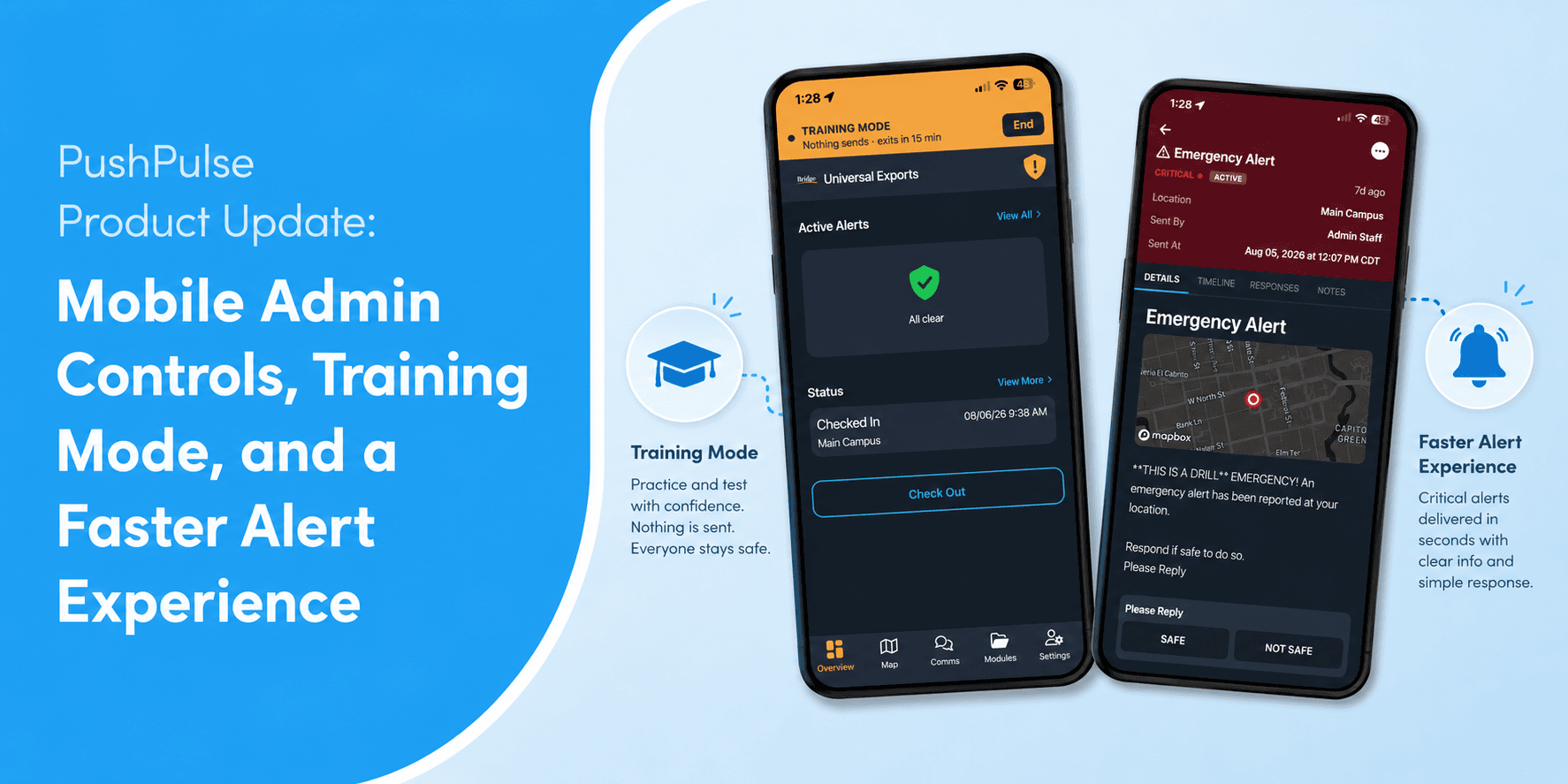
Training and policy. Training mode runs the full alert protocol clearly labeled as practice, so nothing is sent and teams can rehearse activation and response without alarming anyone. A document library puts policies, procedures, and training materials in front of the team where they already work.
Records. Incident management builds a timestamped timeline automatically, logging the initiating alert, every notification, and every acknowledgment, with exportable reports and multi-site visibility for the employer proving compliance in several jurisdictions at once.
A retailer that stands up silent alerting, training records, and incident logs for New York already has the bones of what Washington, the city ordinances, and the next statute will ask for.
The trend line
More states are moving, and they are moving in a predictable order: documentation first, then devices for the highest-risk roles. The two-model framework is your map. Wherever you operate, ask whether you face a documentation mandate, a device mandate, or both, and build the underlying capability once instead of chasing statutes one at a time.
Want to see how these requirements map to your locations? We are glad to walk through how silent alerting, training records, and incident documentation come together for the states where you operate. What does compliance look like across your specific footprint? Book a demo and we will map the silent response button requirement, and everything around it, to your locations. You can also see how the platform works for multi-site workplaces.