

Your team already carries a better radio in their pocket.
Two-way radios are expensive, limited by range, and dead the moment a battery runs out at the wrong time. PushPulse push-to-talk works over cellular and wifi on the phones your team already has, with talk groups, no range limits, and none of the hardware overhead. Same operational capability. A fraction of the cost.
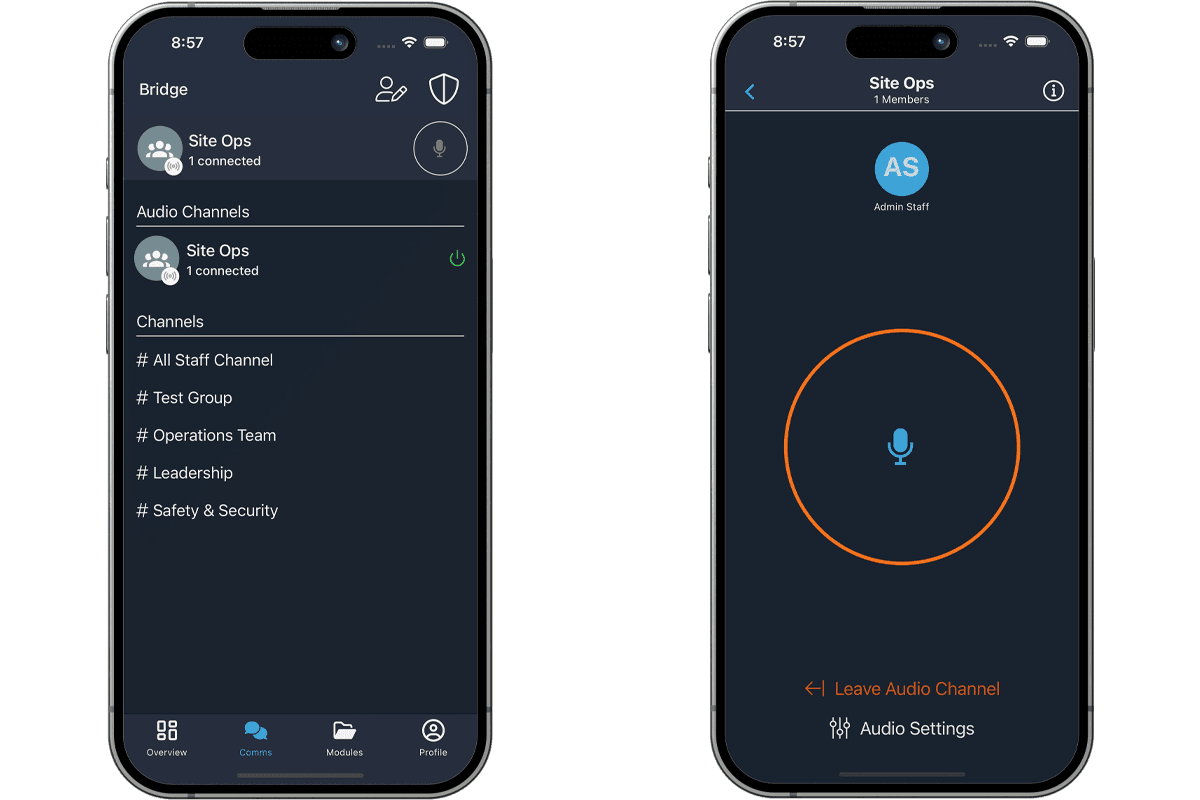
No Hardware Costs
No Range Limits
Talk Groups
Works on Any Phone
Radios cost more than you think and deliver less than you need
A two-way radio fleet looks like a one-time hardware purchase until you account for everything that comes with it. Replacement units when radios get dropped, lost, or broken. Battery packs and charging stations that need maintenance and eventual replacement. FCC licensing fees for licensed frequencies. Repeater infrastructure to extend range into basements, parking structures, and distant buildings. A dedicated person to manage distribution at the start of every shift and collection at the end. And after all of that investment, a radio that stops working the moment someone walks outside the coverage zone. The fleet that seemed like a practical solution to team communication is a recurring operational cost with hard geographic limits baked in.
- Hardware purchase, replacement, and maintenance costs
- Battery packs, chargers, and charging infrastructure
- FCC licensing fees for licensed frequency bands
- Repeater infrastructure for extended coverage
- Per-shift distribution and collection overhead
- Hard range limits regardless of infrastructure investment
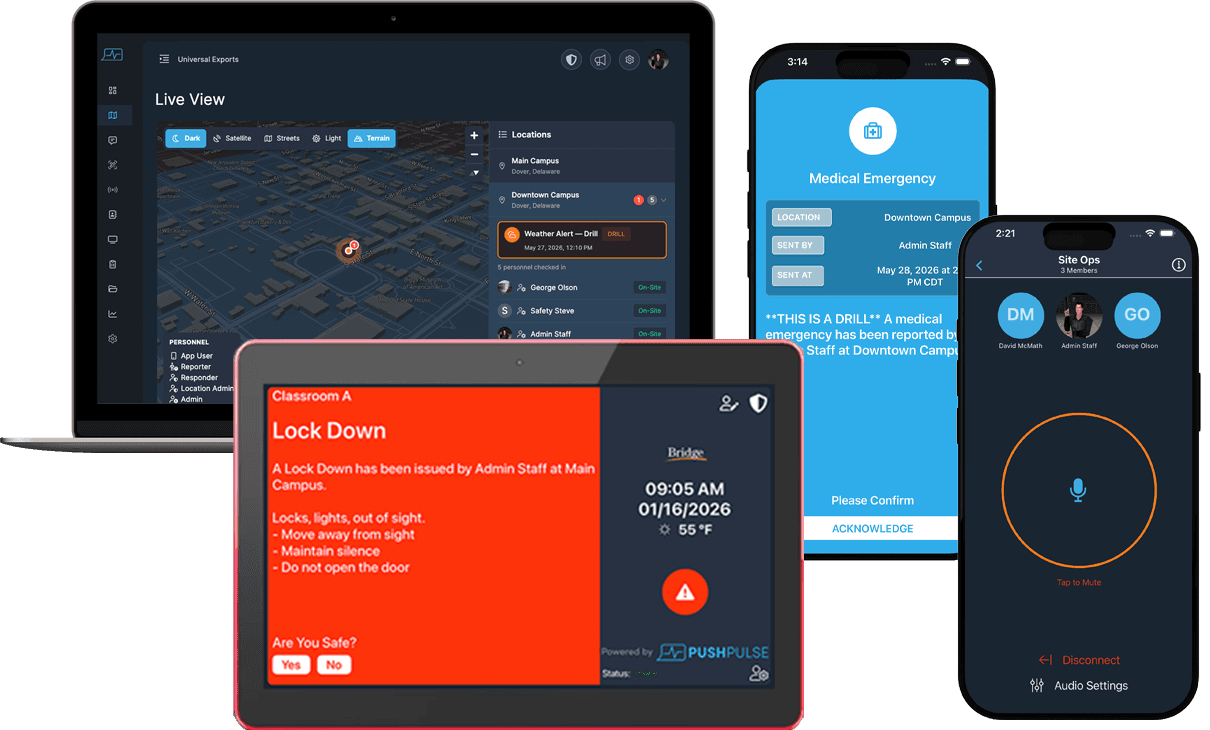
Hold to talk. Release to listen. No radio required.
PushPulse push-to-talk works exactly the way your team expects a radio to work. Hold the button, speak, release. Instant voice transmission to everyone in the talk group. The difference is that it runs over cellular and wifi on iOS and Android devices your team already carries, so there is no hardware to buy, no batteries to manage, no charging station to maintain, and no coverage zone to stay inside. A security guard on patrol three miles from the office is on the same channel as the coordinator at the front desk. A volunteer at an off-site church event is in the same talk group as the safety team back at the main campus. The phone in their pocket is the radio.
- Hold-to-talk voice transmission over cellular and wifi
- Works on iOS and Android
- No dedicated hardware required
- No FCC licensing needed for cellular PTT
- Works anywhere there is cellular or wifi signal
- Instant transmission with no call setup delay
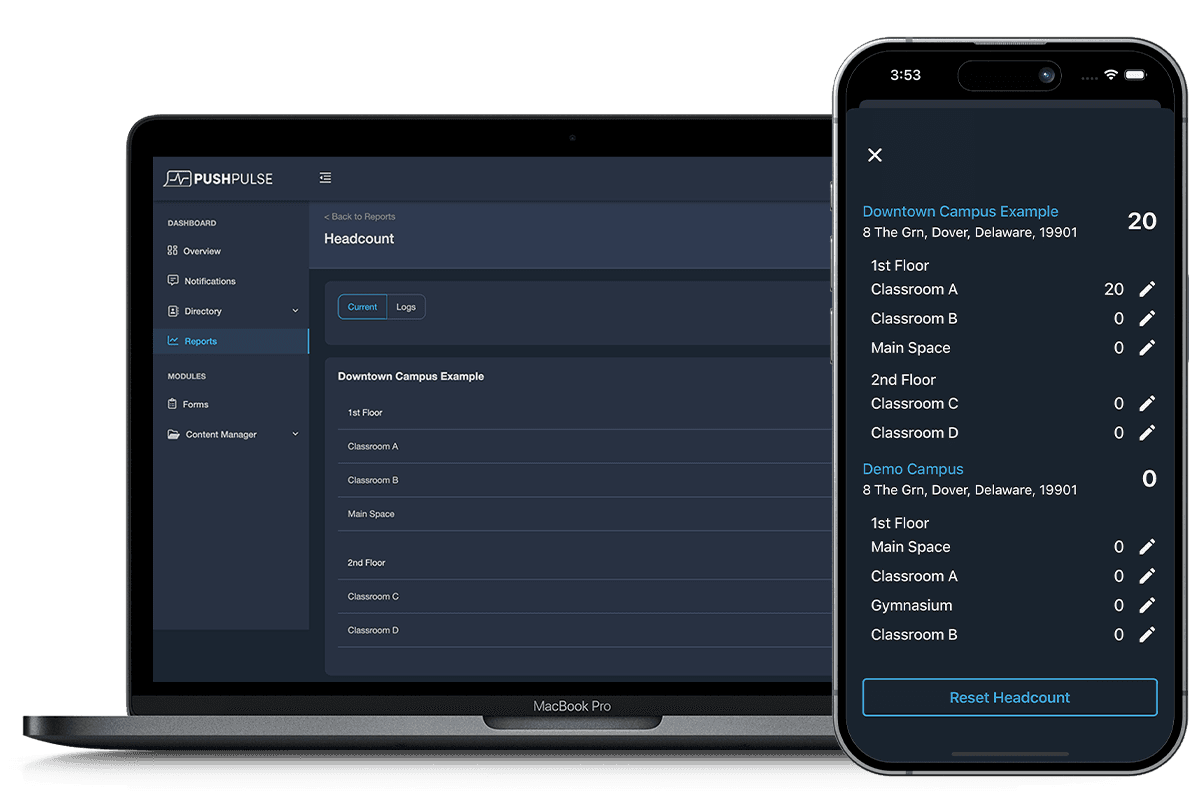
The same channels your team already uses, without the radio infrastructure
Radio users organize their teams into channels. Channel 1 for all-call. Channel 3 for perimeter. Channel 7 for the safety team. PushPulse talk groups work exactly the same way, except they are named, easy to create, and not limited by the number of frequencies your equipment supports. Create a group for each team, post, location, or operation. Members join the relevant groups and hear only the traffic that belongs to them. A church safety team can have a children's ministry group, a parking team group, and a command group running simultaneously on the same device, without anyone needing to manually switch a channel selector under pressure. For security operations running multiple simultaneous details, talk groups replace the channel discipline that radios require and adds the flexibility that radios cannot provide.
- Named talk groups for each team, post, or operation
- Multiple groups active simultaneously on one device
- No manual channel switching required
- Admin control over group membership
- Create and adjust groups in minutes without hardware changes
- Unlimited groups without additional licensing or equipment

Set up in minutes. No IT project. No training week.
Switching from radios to push-to-talk over cellular sounds like an infrastructure project. It is not. PushPulse Comms is set up by an admin in minutes: create the talk groups, add your team members, and your people are on the air from the app on their existing phones. No hardware deployment, no installation appointments, no firmware updates, no range testing, no charging infrastructure to configure. Team members who have never used PushPulse before figure out the PTT interface in under a minute because it works exactly like the radios they already know. The transition from a radio fleet to PushPulse Comms is the rare technology switch where the new system is genuinely simpler to operate than the one it replaces.
- Admin setup in minutes from the web or desktop app
- No hardware deployment or installation required
- Team members onboard from their existing phones
- Familiar hold-to-talk interface requires no training
- Gradual transition: run PushPulse alongside radios during switchover
- No range testing, firmware updates, or infrastructure configuration
See how it all connects
See PushPulse in action
Upgrading your safety and operations strategy is easier than you think. Get a personalized walkthrough from our team.