When an emergency strikes a school — whether it's a fire, a medical crisis, a severe weather event, or an intruder on campus — the difference between chaos and a coordinated response often comes down to one thing: preparation. Specifically, whether your school has a well-defined Emergency Response Team (ERT) with clear roles, trained people in each seat, and the tools to communicate instantly.
This guide walks through the key roles every school ERT should have, what each person is responsible for, and how to structure your team so everyone knows exactly what to do when seconds count.
What Is a School Emergency Response Team?
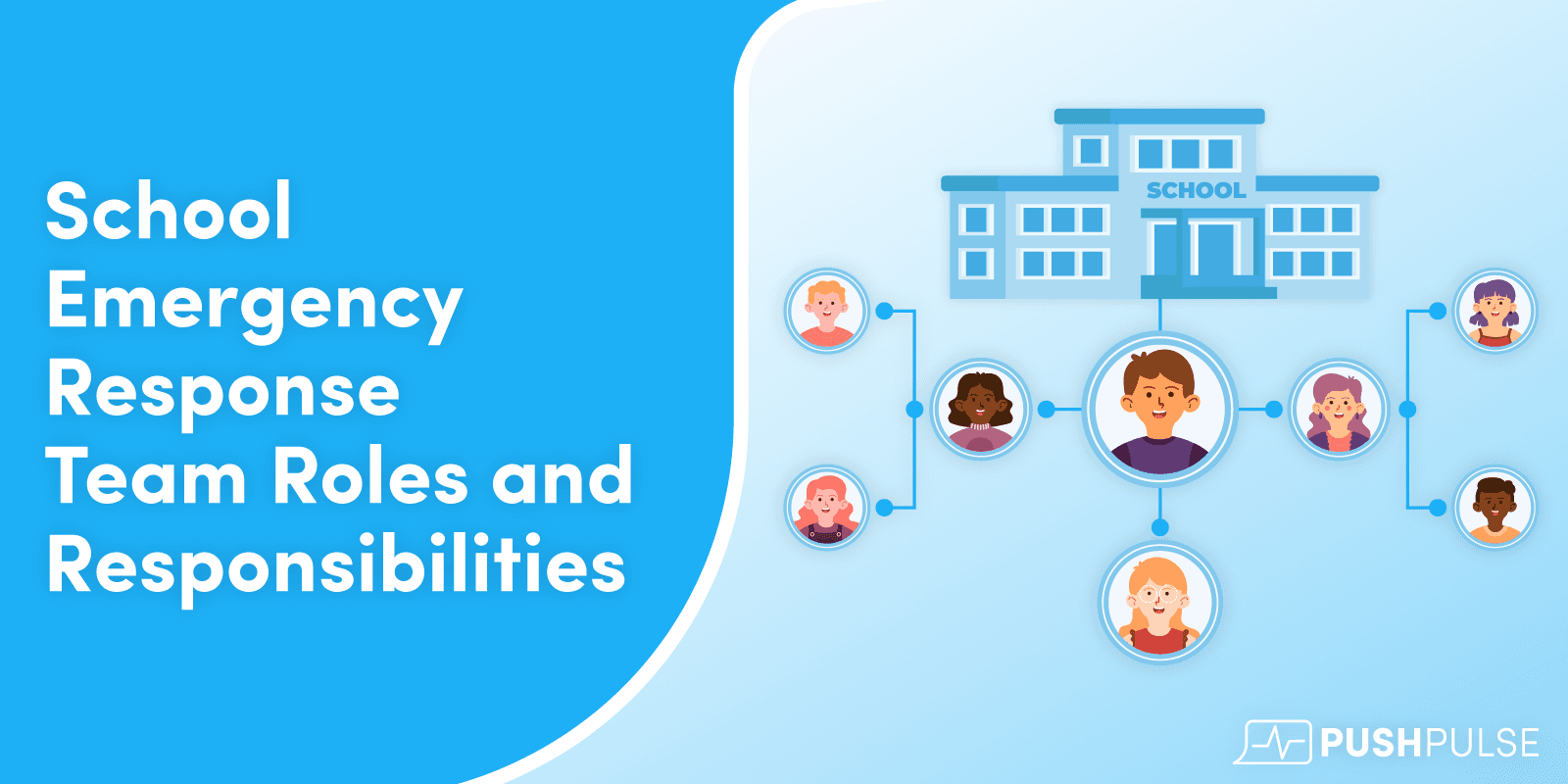
A School Emergency Response Team is a designated group of staff members who are trained and assigned to lead emergency response efforts on campus. The ERT is the backbone of your school's emergency action plan — they take charge during an incident, coordinate with first responders, manage communications, and ensure the safety of students and staff.
Most schools already have some version of this structure in place. The goal of this guide is to help you formalize it, clarify responsibilities, and make sure your team is equipped to execute under pressure.
Core ERT Roles and Responsibilities
1. Incident Commander (IC)
Who it is: Typically the principal or head of school — the most senior person on campus during an emergency.
What they do:
Assumes overall command and coordination of the emergency response
Makes final decisions on actions such as lockdowns, evacuations, or shelter-in-place orders
Serves as the primary liaison with law enforcement, fire, and emergency medical services
Ensures that all departments and staff are executing their assigned roles
Documents key decisions and timelines throughout the incident
Why it matters: Every emergency response needs a single point of authority. The IC prevents conflicting instructions and ensures a unified response across the entire campus.
2. Safety and Security Coordinator
Who it is: The school's security director, facilities manager, or designated safety officer.
What they do:
Monitors access points, surveillance systems, and campus perimeter during an incident
Conducts or coordinates the initial threat assessment
Implements lockdown or evacuation protocols, including securing classrooms and exterior doors
Directs staff on proper lockdown or evacuation procedures
Coordinates with arriving law enforcement and provides critical building information (floor plans, access codes, occupant locations)
Why it matters: This person is your eyes and ears on the ground. A strong safety coordinator accelerates the initial response and gives law enforcement the information they need to act quickly and effectively.
3. School Security Officer (SSO)
Who it is: A trained security professional employed directly by the school or district — distinct from law enforcement, but specifically hired to maintain campus safety day-to-day.
What they do:
Patrols campus buildings, grounds, and entry points during normal operations and throughout an incident
Monitors and manages access control systems, visitor screening, and surveillance cameras
Serves as the first line of response to threats, disturbances, or suspicious activity on campus
Supports lockdown execution by physically securing doors, sweeping common areas, and directing students and staff to safety
Acts as a ground-level information source for the Incident Commander — relaying real-time conditions from across the campus
Assists law enforcement when they arrive by providing building knowledge and situational awareness
Why it matters: SSOs bridge the gap between administrative safety planning and boots-on-the-ground response. Because they're already embedded on campus and familiar with the layout, students, and staff, they can act immediately — without waiting for external help to arrive.
Note for smaller schools: Not every school has dedicated security staff. If yours doesn't, consider assigning security patrol duties to a trained facilities or operations staff member and investing in additional access control technology to compensate.
4. School Resource Officer (SRO)
Who it is: A sworn law enforcement officer — typically from a local police or sheriff's department — assigned to the school on a full-time or part-time basis.
What they do:
Serves as the primary armed law enforcement presence on campus
Takes command of law enforcement activities during an active threat or criminal incident
Coordinates directly with the Incident Commander while maintaining independent authority over law enforcement decisions
Provides real-time intelligence to responding officers who are unfamiliar with the campus layout
Conducts threat assessments and behavioral threat investigations in partnership with school administration
Builds relationships with students that can surface early warning signs of potential threats
Leads or participates in active threat response drills (ALICE, CRASE, etc.)
Why it matters: An SRO is not just a security presence — they are a full law enforcement officer who can respond, communicate with dispatch, and take action in ways that civilian staff cannot. During a critical incident, having an SRO already on campus can significantly compress response time and save lives.
Coordination is key: The SRO and the school's Incident Commander must have a pre-established command relationship. During an active threat, law enforcement authority supersedes school administration on tactical decisions — but the IC remains responsible for school operations, communications, and student accountability. Define this handoff clearly before you ever need it.
5. Communications Officer
Who it is: Often the school's office manager, administrative director, or a designated communications staff member.
What they do:
Sends emergency alerts to staff, students, and parents using the school's mass notification system
Manages inbound calls and prevents phone lines from being overwhelmed
Coordinates messaging to ensure accurate, consistent information is going out — and that rumors are being countered
Maintains communication logs documenting who was notified and when
Coordinates with district-level communications staff if applicable
Why it matters: Poor communication during an emergency amplifies fear and confusion. A dedicated communications officer ensures that the right people have the right information at the right time — and that staff are not distracted from their primary safety duties by managing calls and messages.
PushPulse Tip: Modern mass notification platforms like PushPulse allow your team to send targeted, multi-channel alerts to staff, parents, and emergency contacts in seconds — from a desktop or mobile device. No phone trees. No delays.
6. Medical Response Coordinator
Who it is: The school nurse, or a trained staff member with first aid/CPR certification.
What they do:
Provides immediate first aid to injured students or staff
Triages medical needs and determines who requires emergency services
Maintains a confidential registry of students with significant medical conditions (severe allergies, seizure disorders, etc.)
Coordinates with EMS when they arrive on scene
Manages access to the first aid kit, AED, and medical supplies
Why it matters: Injuries can occur in any type of emergency. A designated medical coordinator ensures that someone with the right training is focused entirely on physical welfare — not split between medical response and other duties.
7. Student Accountability Manager
Who it is: An assistant principal, dean of students, or senior teacher assigned to this role.
What they do:
Manages the student headcount and accountability process during evacuation or shelter-in-place
Coordinates with classroom teachers to confirm all students are accounted for
Maintains updated class rosters and student records accessible during an emergency
Identifies and reports any missing or unaccounted-for students to the Incident Commander
Manages student reunification with parents or guardians after an incident
Why it matters: Knowing exactly where every student is during an emergency is non-negotiable. The student accountability manager ensures nothing falls through the cracks and gives the IC accurate, real-time information.
8. Staff and Volunteer Coordinator
Who it is: An HR leader, operations manager, or senior administrator.
What they do:
Assigns and deploys non-essential staff to support roles during an incident
Manages volunteers or external resources arriving at the scene
Ensures staff are following their assigned protocols and not self-directing in ways that could create confusion
Debriefs with staff after an incident and identifies gaps in execution
Why it matters: During a major incident, you'll have well-meaning staff who want to help but aren't sure what to do. Without coordination, that can create as many problems as it solves.
9. Parent and Community Liaison
Who it is: A counselor, community outreach coordinator, or senior administrator.
What they do:
Manages the parent staging area during an active incident
Communicates with families waiting for reunification in a calm, factual manner
Coordinates with local media if needed, directing them to the designated spokesperson
Follows up with families after the incident, especially in cases involving injury or trauma
Connects students and families with mental health support resources post-incident
Why it matters: Parents arriving at the scene of a school emergency can inadvertently interfere with the response. A dedicated liaison keeps families informed and contained — reducing panic and protecting the integrity of the response.
Building Your ERT: Key Principles
Train Before You Need To
Assign every role before an emergency happens. Each team member should know their responsibilities by memory, have access to the tools they need, and practice through tabletop exercises and drills at least twice per year.
Document Everything
Your emergency action plan should clearly name the primary and backup person for each role. Backups matter — emergencies don't wait for people to be on campus.
Use Technology to Extend Your Team's Reach
The biggest challenge most school ERTs face isn't training — it's communication. When an incident unfolds, reaching every staff member, parent, and stakeholder quickly and accurately is critical. A dedicated emergency notification platform removes the bottleneck.
With PushPulse, school safety teams can:
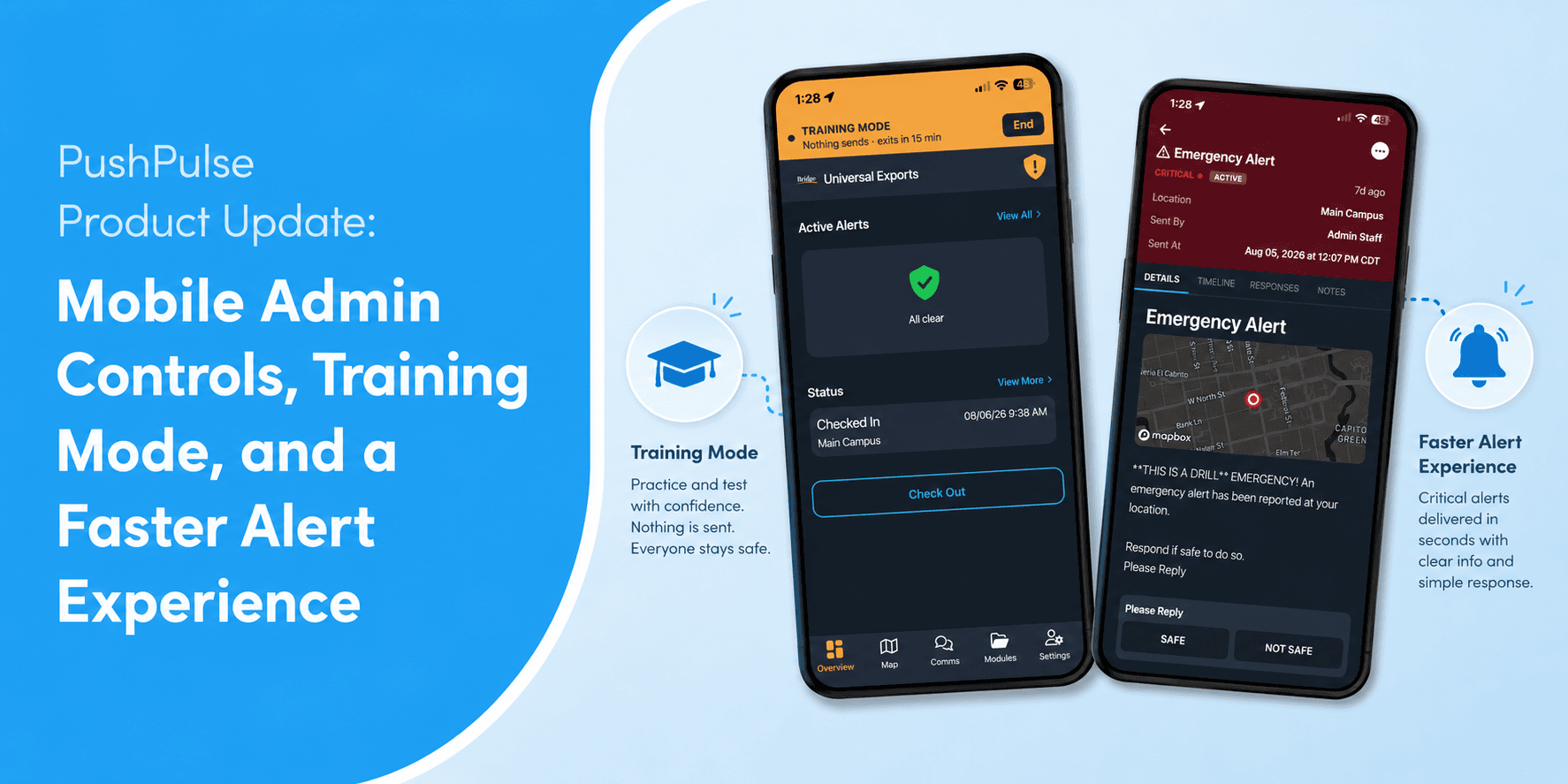
Send instant, targeted alerts across SMS, email, voice, and app push notifications
Allow staff to acknowledge alerts so you know who received the message
Activate pre-built response protocols with a single tap
Monitor incident status in a centralized dashboard in real time
Review After Every Incident and Drill
Every drill should end with a debrief. What worked? What didn't? Where did communication break down? Use those findings to refine your team structure, your protocols, and your tools.
The Bottom Line
A school emergency response team is only as effective as the preparation behind it. Clearly defined roles eliminate hesitation. Trained people in every seat to eliminate chaos. And the right communication tools ensure that everyone — staff, students, parents, and first responders — has the information they need to stay safe.
If your school is still relying on phone trees, PA announcements, or manual processes to manage emergency communications, it's worth taking a hard look at what a modern alert platform can do for your response capability.
PushPulse helps schools, churches, and security teams send the right alert to the right people in seconds — so your team can focus on what matters most. Learn how PushPulse supports school emergency preparedness →