Every Sunday, thousands of volunteers across the country put on a name tag, smile at a stranger, and quietly become their congregation's first line of defense — without ever being told that's the job.
Ushers direct foot traffic. Greeters build relationships at the door. Security teams monitor the perimeter. In isolation, each role serves its function. But when an emergency unfolds — a medical crisis in the sanctuary, a distressed individual in the lobby, a suspicious vehicle in the parking lot — the question isn't whether each team is doing their job. The question is: are they doing it together?
This guide is for operations, facilities, and security leaders at churches who want to move beyond siloed volunteers and build an integrated, communicating, confident safety team — without overhauling what already works.
Why Sunday Volunteers Are an Untapped Safety Asset
Before diving into coordination tactics, it's worth recognizing what you already have. Your ushers, greeters, and security volunteers are:
Present before, during, and after services — often before paid staff arrive
Familiar with regular attendees, making it easier to spot someone out of place
Distributed throughout your facility, giving you eyes in places a single person can't cover
Trusted by your congregation, which matters enormously during a crisis
The challenge is that most churches train each group separately and give them no shared language, no communication protocol, and no clear chain of command when something goes wrong. That's the gap this guide addresses.
Step 1: Define Safety Roles Within Each Volunteer Group
You don't need to turn every greeter into a security guard. What you do need is for every volunteer to understand their safety lane — what they watch for, what they report, and who they call.
Greeters
Greeters are your first contact point. They see every person who walks through the door. Train them to:
Warmly engage newcomers, especially those who seem nervous, agitated, or disoriented
Note anyone who declines to engage or avoids eye contact entirely
Watch for individuals who seem to be surveilling the space rather than attending service
Know the immediate escalation contact — typically a designated safety team lead or security volunteer
Ushers
Ushers move through the congregation and know the physical layout intimately. Their safety responsibilities include:
Keeping aisles and exits clear at all times
Identifying medical situations early (someone who looks faint, confused, or in distress)
Knowing the location of AEDs, first aid kits, and fire extinguishers
Guiding congregants during an evacuation or shelter-in-place scenario
Security Volunteers
Security volunteers provide the tactical layer. Their focus should be:
Monitoring parking lots and exterior access points
Controlling access to sensitive areas (nursery, children's wing, pastor's office)
Responding to escalated situations flagged by greeters or ushers
Maintaining communication with church leadership and, when necessary, 911
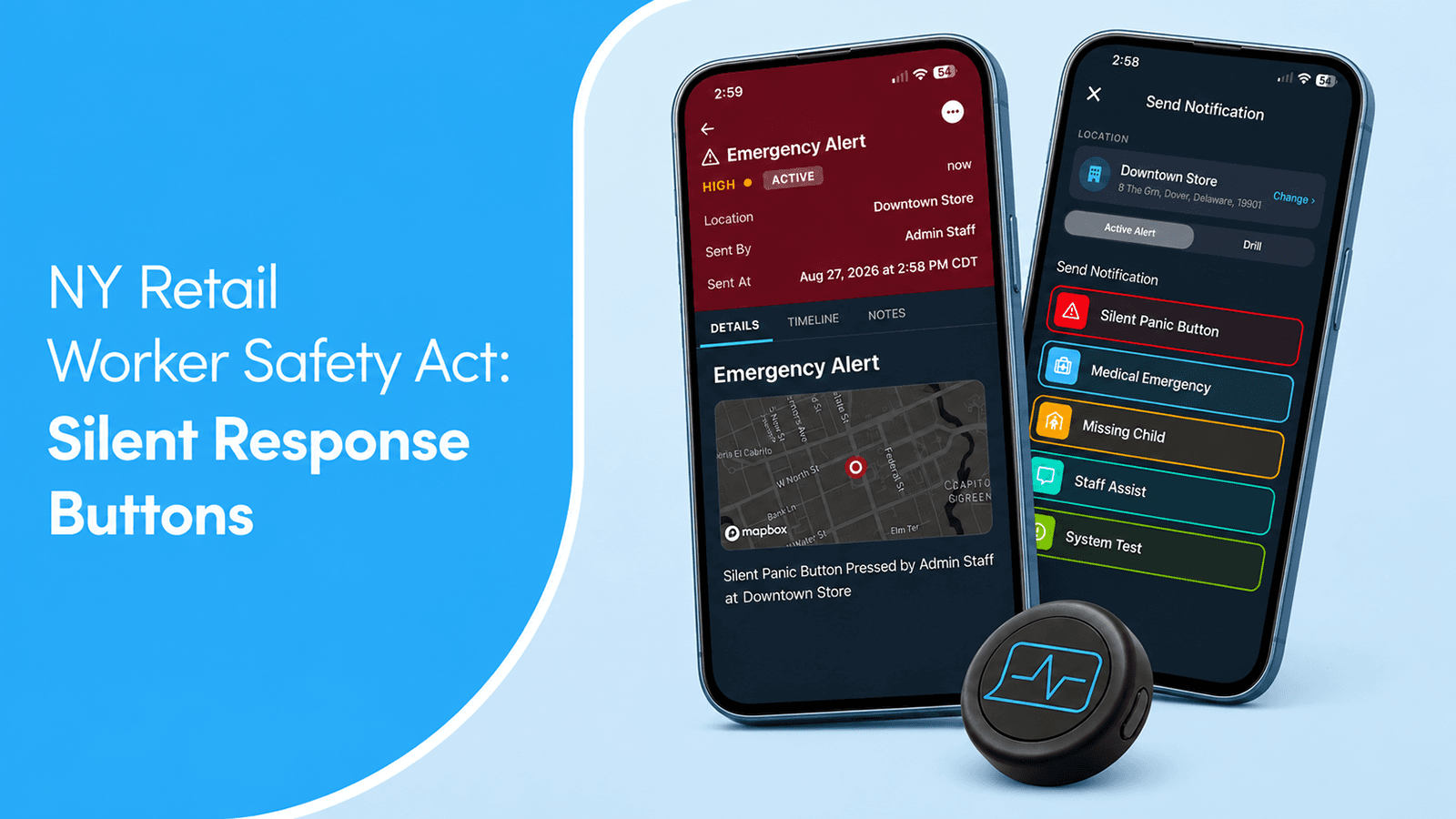
💡 PushPulse Tip: Not every incident needs to reach every person. With PushPulse, you can send alerts to specific role groups — notifying only your security team about a parking lot concern, or only ushers about a needed evacuation assist. The right people get the message; everyone else stays focused on their job.
Step 2: Build a Shared Communication Protocol
The most common breakdown in volunteer safety teams isn't training — it's communication. When a greeter sees something suspicious, do they know who to tell? How fast? Through what channel?
Establish a tiered communication protocol:
Tier 1: Observe and Note
Something seems slightly off but is not an immediate threat. The volunteer makes a mental note and informs their team lead at the next natural checkpoint — before service, during rotation, etc. No service disruption.
Tier 2: Report and Monitor
A situation warrants closer attention. The volunteer immediately contacts the safety team lead via your agreed channel — radio, a group text, or a mass notification platform like PushPulse. The lead begins monitoring and may dispatch another volunteer to assess.
Tier 3: Escalate and Act
An active or imminent threat. All volunteers are notified simultaneously via broadcast alert. The security team engages. Ushers begin moving congregants. Greeters lock or guard entry points. Staff contact 911.
The key to making this work is that every volunteer needs to know these tiers by heart — and have a reliable way to send and receive information in each scenario.
💡 PushPulse Tip: PushPulse lets you mirror your real-world volunteer structure inside the platform — creating distinct groups for greeters, ushers, and security, each with their own sending permissions and notification rules. That way, a greeter can flag an incident to their lead without accidentally triggering a campus-wide alert, and a security lead can escalate to everyone with a single tap.
Step 3: Run a Pre-Service Safety Huddle
One of the highest-impact, lowest-effort things you can implement immediately is a five-minute pre-service safety huddle. Gather your ushers, greeters, and security leads in one place before doors open and cover:
Who is on which team today and how to reach each lead
Any known concerns (a congregant going through a difficult time, an unfamiliar group expected to attend, a maintenance issue affecting exit routes)
The communication channel being used that day (radio channel, PushPulse group, etc.)
A quick reminder of escalation steps
Five minutes before service is infinitely better than five minutes into a crisis.
Step 4: Conduct Scenario-Based Drills (Not Just Lectures)
Most volunteer safety training takes the form of a PowerPoint presentation or a printed handout. This is better than nothing, but it's not enough. Adults retain information when they act it out.
Twice a year, run scenario drills that cross all three volunteer groups:
Scenario A: Medical Emergency in the Sanctuary
An usher notices a congregant who has collapsed in a pew.
The usher sends an alert through PushPulse while another volunteer retrieves the AED.
The safety lead meets EMS at the front door — flagged by a greeter.
Remaining ushers quietly manage foot traffic away from the area.
Scenario B: Disruptive Individual at the Entry
A greeter encounters someone who is agitated and refusing to leave the lobby.
The greeter sends an alert while maintaining a calm, non-confrontational presence.
Security responds within seconds; ushers quietly begin moving nearby families to a secondary seating area.
If the situation escalates, security engages directly while a designated lead contacts 911 and notifies church leadership.
After each drill, debrief as a full team. What worked? Where was there confusion? What communication gaps showed up? Adjust your protocols accordingly.
💡 PushPulse Tip: Scenarios like this require two things to happen simultaneously — someone managing the individual and someone moving people to safety. PushPulse lets you alert security and ushers in the same broadcast so both responses kick off at once, without anyone needing to make separate calls.
Step 5: Use Technology to Close the Communication Gap
Walkie-talkies were the state of the art in volunteer communication for decades. They're still useful — but they have serious limitations when you have 20+ volunteers spread across a large campus, multiple worship spaces, or a parking area covering several acres.
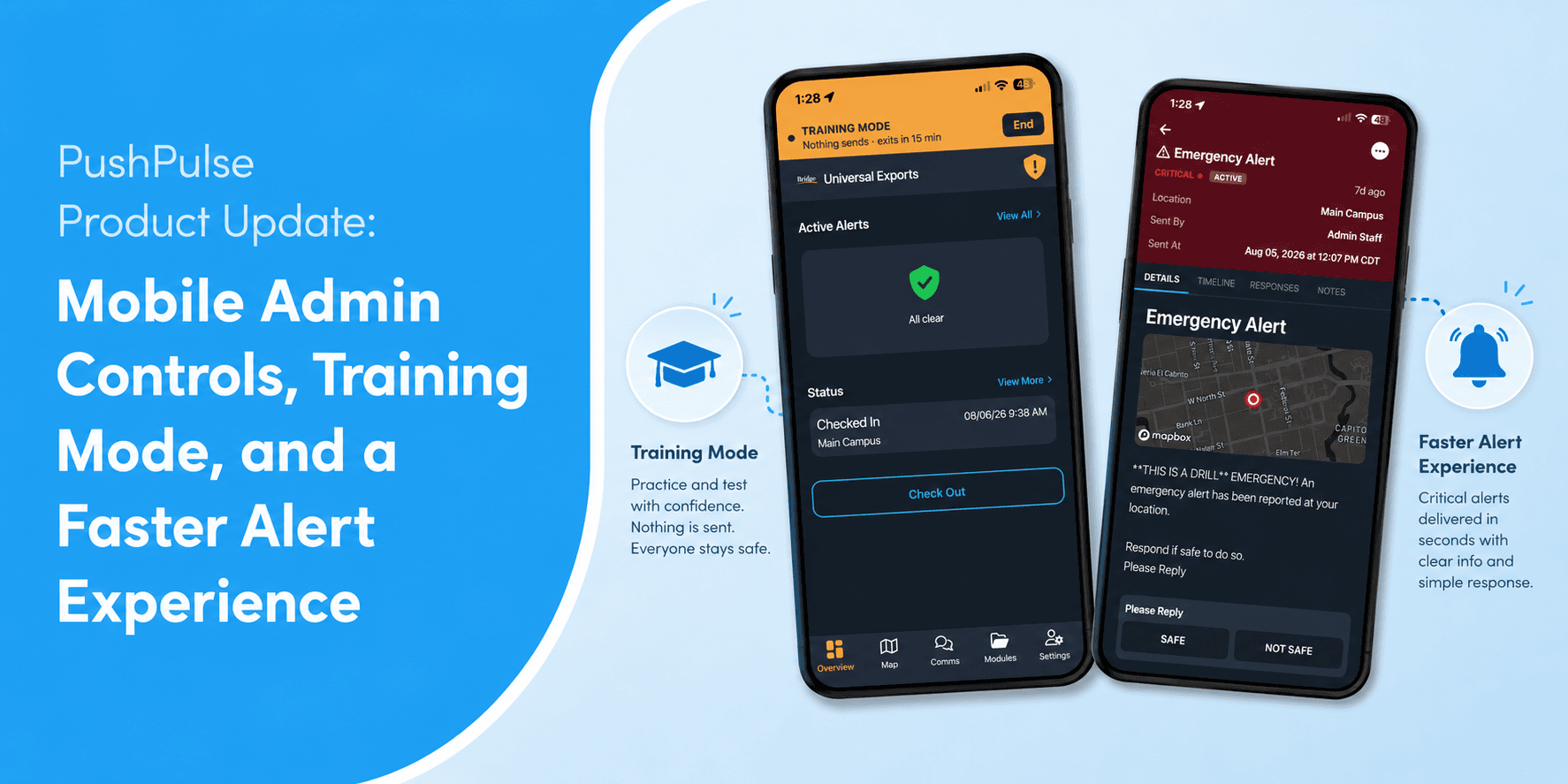
Modern emergency notification platforms like PushPulse are built to address exactly this problem. With PushPulse, church safety leaders can:
Send instant alerts to all volunteers, specific role groups, or individual team leads
Trigger pre-built incident templates (medical emergency, suspicious person, evacuation) with a single tap
Receive acknowledgment confirmations so you know who got the message and who hasn't responded
Coordinate across multiple campuses or service times from a single dashboard
Document incidents in real time for after-action review and insurance purposes
The goal isn't to add complexity — it's to replace the chaos of "text everyone and hope" with a system that works the first time, every time.
Step 6: Create a Culture Where Volunteers Feel Empowered to Act
Even with perfect protocols and great technology, your safety program lives or dies on one thing: whether your volunteers feel confident enough to act when it matters.
That means:
Telling volunteers explicitly that their observations and reports are valued — not burdensome
Celebrating near-misses and good catches, not just major incidents
Making it psychologically safe to escalate — no one should fear "overreacting" to a gut feeling
Reinforcing that their role is to observe, report, and support — not to confront or restrain
A greeter who flags a concern to the safety lead has done their job perfectly, even if the concern turns out to be nothing. Build that expectation into your culture and your volunteers will be far more effective.
Putting It All Together: Your 30-Day Action Plan
Week 1: Document role-specific safety responsibilities for greeters, ushers, and security. Share with all team leads.
Week 2: Establish your tiered communication protocol and select your communication platform.
Week 3: Launch the pre-service safety huddle. Run it for three consecutive Sundays and refine.
Week 4: Conduct your first cross-team scenario drill and debrief with all three volunteer groups.
You don't need a massive budget or a full-time safety staff to protect your congregation. You need clarity, communication, and a team that knows how to work together. Your ushers, greeters, and security volunteers are ready — they just need a system.
See How PushPulse Helps Church Safety Teams Communicate Faster
PushPulse is built for organizations like yours — where the people keeping everyone safe are often volunteers working with limited resources and no margin for error. Request a free demo at pushpulse.com and see how one-tap alerting can transform your Sunday safety program.